
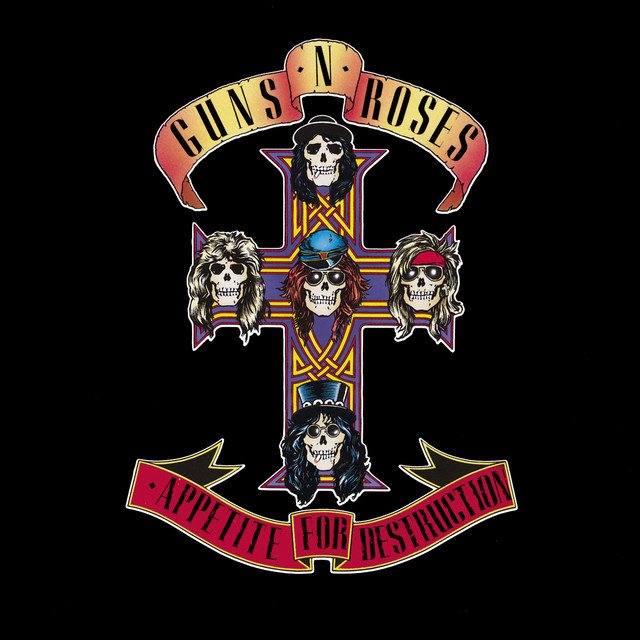
Welcome To The Jungle – Guns N’ Roses
Release date: 1987-07-21
Steel and Vines: Why Welcome to the Jungle Still Bites
Introduction
Guns N’ Roses kicked down the door of late-80s rock with Welcome To The Jungle, the opening salvo of Appetite For Destruction. What began as a snarling hard-rock statement in 1987 still lands with unnerving immediacy for listeners raised on alternative and post-grunge textures, thanks to its coiled groove, feral vocal presence, and street-level storytelling.
Release and context
Welcome To The Jungle appears as track one on the band’s debut album, Appetite For Destruction, released on . Produced by Mike Clink and powered by the classic lineup—Axl Rose, Slash, Izzy Stradlin, Duff McKagan, and Steven Adler—the song set the tone for a record that would redefine mainstream heavy music by swapping hairspray gloss for grit and danger.
Sound and style through a post-grunge/alt-rock lens
While historically a hard-rock anthem, Jungle reads seamlessly to modern ears as proto–alternative rock with the kind of raw, unvarnished punch that post-grunge later embraced. The intro’s echo-laced guitar figure and siren-like slides create an atmospheric dread more akin to alt-rock’s moodcraft than glam metal’s sheen. The main riff bites with a serrated, mid-tempo churn, and the rhythm section locks into an elastic pocket that prizes feel over flash—a hallmark of the grunge and post-grunge eras.
Axl Rose’s performance pivots between whispered menace and full-throated catharsis, a dynamic shift that anticipates the quiet-loud volatility central to 90s alternative. Slash’s lead work leans on expressive bends, wah-snarls, and melodic hooks rather than speed for its own sake, giving the song a melodic identity that survives endless replays. The mix is dry, punchy, and immediate: guitars panned for width, bass with enough midrange bark to cut, and drums that crack without losing swing—production choices that align with the later alt-rock preference for organic impact over studio gloss.
Song meaning
Welcome To The Jungle maps the seduction and peril of big-city life—Los Angeles as myth and meat grinder. The second-person perspective functions like a predatory tour guide, selling opportunity while warning of the cost. Fame, vice, exploitation, and survivalism braid together in a narrative that treats the city as a living organism that tests the uninitiated. It’s less a celebration of decadence than a document of its gravity: pleasures lure, appetites intensify, and the line between hunter and hunted erodes. That tension—temptation versus consequence—gives the song its enduring psychological charge.
What makes it stand out
Everything is engineered for escalation. The atmospheric intro primes anxiety, the verse riff coils like a spring, and the call-and-response vocal arrangement paces the listener through waves of pressure and release. The chorus detonates without losing clarity, and the bridge steers the track into a feverish sprint before the final onslaught. It’s meticulously structured chaos—memorable hooks, identifiable motifs, and a live-wire energy that feels perilously close to slipping its leash. Few singles balance immediacy and menace this effectively.
Why it appeals to modern rock and metal fans
For listeners steeped in alternative and post-grunge, Jungle offers familiar DNA: unvarnished tones, muscular groove over virtuoso excess, and a narrative steeped in alienation and urban pressure. For metal fans, the riff architecture, percussive palm-mutes, and venomous vocal delivery deliver the necessary bite, while the song’s hook-forward design keeps it festival-ready. It’s heavy without being hermetic, tuneful without sanding off its edges—a sweet spot that modern hard rock and alt-metal continually chase.
Legacy and aftershock
As the front door to Appetite For Destruction, Welcome To The Jungle reframed mainstream expectations for aggressive guitar music at the close of the 80s. Its street-level realism and dynamic volatility forecast much of what would dominate rock in the following decade, from brooding alternative to hook-laden post-grunge. Decades on, it still feels like a warning flare over the skyline—one that keeps guiding new generations toward rock’s wilder, more honest side.
Listen on Spotify:
Useful links:
