
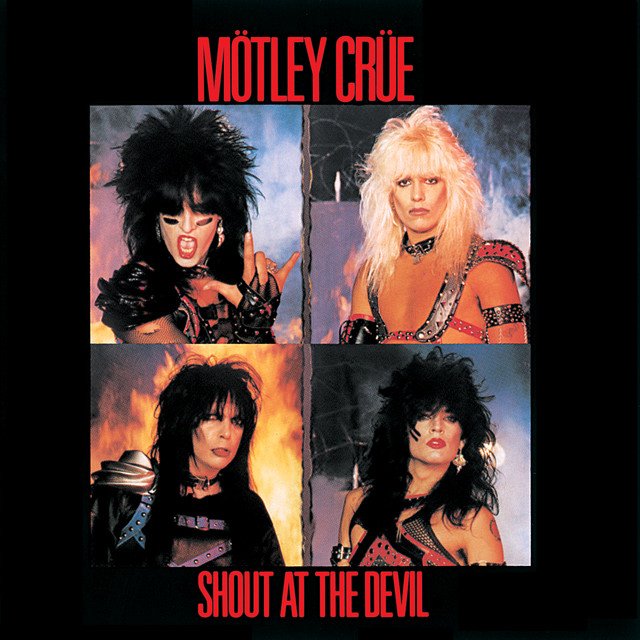
Looks That Kill – Mötley Crüe
Release date: 1983-09-26
Looks That Kill: Mötley Crüe’s Sharp-Edged Classic Through a Modern Alt-Rock Lens
Opening Shot: A Classic That Still Cuts
Looks That Kill remains one of Mötley Crüe’s most enduring statements, a riff-forward barrage that helped cement the band’s ascent during the early 80s metal surge. Heard today, it is remarkably pliable: a glam-metal juggernaut that also maps neatly onto the darker, more muscular sensibilities that post-grunge and alternative rock fans gravitate toward.
Release and Album Context
The song arrived as a standout from the band’s breakthrough album Shout At The Devil, released on 1983-09-26. That record pushed Mötley Crüe from Sunset Strip notoriety into the hard rock mainstream, pairing an occult-tinged aesthetic with a leaner, heavier sound. Looks That Kill sits near the album’s core as its most immediate, arena-ready single, powered by Mick Mars’ serrated guitar tone, Tommy Lee’s percussive snap, Vince Neil’s high-wire vocals, and Nikki Sixx’s lockstep low end.
Sound and Style: Framed Through Post-Grunge and Alternative Rock
While rooted in 80s metal, the mechanics of Looks That Kill make surprising sense when filtered through a post-grunge or alternative rock lens. The riff isn’t just flashy; it is economical and percussive, hammering a mid-tempo stomp that would later become a cornerstone of 90s heaviness. The groove owes as much to tightly palm-muted downbeats and negative space as it does to speed or shred, foreshadowing the punchy, riff-centric approach championed by bands from Alice in Chains to Stone Temple Pilots.
Production-wise, the guitars carry a gritty, slightly scooped timbre that prioritizes bite over bloom, leaving room for a kick-and-snare conversation that feels almost modern-rock in its directness. The chorus hits with a blunt-force hook—memorable, chantable, and just dark enough—that aligns with alternative rock’s love of ominous melody. Even the arrangement’s tension-and-release hints at the dynamic playbook that post-grunge would popularize: tight verses coiled around a monolithic main riff, erupting into a cathartic refrain.
Song Meaning: Power, Image, and the Allure of Danger
At its core, Looks That Kill is a stylized portrait of attraction as domination. The subject’s beauty is a weapon, captivating and perilous, turning desire into a battleground. Rather than a simple ode to seduction, the song leans into the femme fatale archetype—seductive power that can command, disarm, and ultimately consume. In the visual language of early 80s Los Angeles, it doubles as commentary on image-as-currency: the idea that style itself can conquer.
The infamous music video amplifies this reading: a post-apocalyptic arena where a leather-clad cohort radiates authority, flipping rock’s usual power dynamics. The staging suggests a world where gaze and presence rule—an apt mirror for a band navigating an era when look, myth, and menace were as influential as sound.
What Makes It Stand Out
Three elements propel Looks That Kill beyond its peers. First, the main riff—minimalist yet venomous—lands instantly and never loosens its grip. Second, the rhythm section’s martial precision turns the track into a runway for the guitars, giving each hit a sledgehammer weight. Third, the hook’s stark phrasing lodges in memory without ornamental excess. It is heavy music with ruthless editing, a trait that keeps it sounding contemporary.
Why It Appeals to Modern Rock and Metal Fans
Fans steeped in post-grunge and alternative rock respond to density, groove, and atmosphere—qualities this song anticipates. The track’s focus on punch over flash resonates with listeners who favor the muscular minimalism of later decades. Its dark, swaggering tone also dovetails with today’s appetite for moody, riff-driven anthems, making it as playlist-friendly alongside modern alt-metal as it is on an 80s retrospective.
Legacy and Lasting Impact
Looks That Kill is a gateway: a glam-metal classic with a structural DNA that travels well into the 90s and beyond. By balancing immediacy with menace, it bridges eras and subgenres, reminding us that the best heavy songs do more than simply roar—they sculpt space, carve hooks into stone, and leave a silhouette that newer generations can trace. For anyone who loves alternative or post-grunge power packaged in a lithe, lethal riff, this cut still lives up to its name.
Listen on Spotify:
Useful links:
