
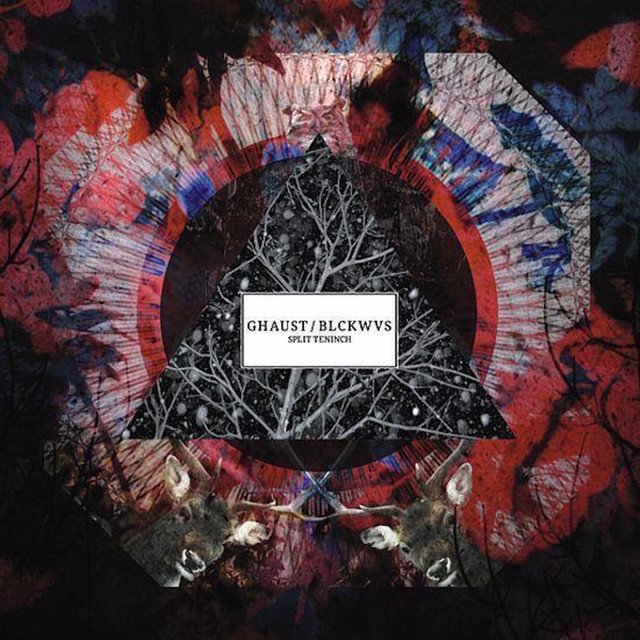
At Sea (We Are Nothing) – Ghaust
Release date: 2010-02-18
Drifting in Dissonance: Exploring Ghaust’s “At Sea (We Are Nothing)”
Introduction
Emerging from the depths of Indonesia’s underground music scene, Ghaust has long been known for their instrumental storytelling. Their track “At Sea (We Are Nothing)”, released as part of the collaborative album Split Teninch on February 18, 2010, is a brooding and evocative piece that bridges the gap between post-grunge atmospherics and alternative rock grit. This track not only carves its own space in the world of experimental rock but also speaks volumes without uttering a single word.
The Album: Split Teninch
Split Teninch is a shared record between Ghaust and fellow sonic explorers, often seen as a testament to Southeast Asia’s growing influence in contemporary rock and metal circles. Released on a niche vinyl format, it showcases raw energy and thematic complexity. Ghaust’s contribution with “At Sea (We Are Nothing)” stands out as a highlight — an introspective journey into isolation, existential thought, and the emotional vastness implied by its title.
Musical Style & Composition
“At Sea (We Are Nothing)” leans heavily into post-grunge textures merged with alternative rock structures. The song opens with haunting reverb-laden guitar layers that ebb and flow like waves crashing against an unseen shore. As drums gradually emerge from beneath the misty tones, they add tension without overwhelming the melodic foundation — a technique reminiscent of later-era Deftones or early Explosions In The Sky.
Unlike traditional post-grunge, which tends to rely on vocal angst and lyric-driven sorrow, Ghaust crafts emotion through instrumentation alone. The mood swings subtly across several movements, building crescendos that reach moments of near-chaotic release before retreating into contemplative silence.
Thematic Depth: Song Meaning
True to its title, “At Sea (We Are Nothing)” explores themes of insignificance and existential floating — both literal and metaphorical. The absence of lyrics invites listeners to project their own meaning onto the music, but there’s a clear narrative drive within the composition itself. It suggests feelings of being adrift in life’s uncertainties, seeking direction amid internal turbulence.
The sea here symbolizes both freedom and futility — an endless expanse where identity dissolves into something larger yet unknowable. It’s this duality that gives the piece an almost spiritual resonance for fans who enjoy unraveling deep emotions through sonic immersion.
Why It Resonates with Modern Rock & Metal Fans
Ghaust may not fall squarely into the heavy riff-laden mold typical of metal bands, but they share the same ethos: intensity, atmosphere, and emotional honesty. For listeners drawn to bands like Russian Circles or Mogwai — groups that use layers rather than vocals to speak volumes — this track offers a fulfilling experience.
The appeal lies in its ability to channel aggression not through distortion alone but through tension-building structure and cathartic release. Its mature sound design and commitment to artistic integrity make it essential listening for fans eager to venture beyond mainstream confines while still staying rooted in rock’s darker aesthetic branches.
Conclusion
“At Sea (We Are Nothing)” exemplifies how instrumental music can be just as narratively potent as lyrical songs. With their work on Split Teninch, Ghaust proves themselves masters of moody minimalism and soul-stirring crescendos. The track remains a haunting reminder that even in silence—or perhaps especially there—we find meaning, depth, and emotional resonance worth revisiting again and again.
Listen on Spotify:
Useful links:
