
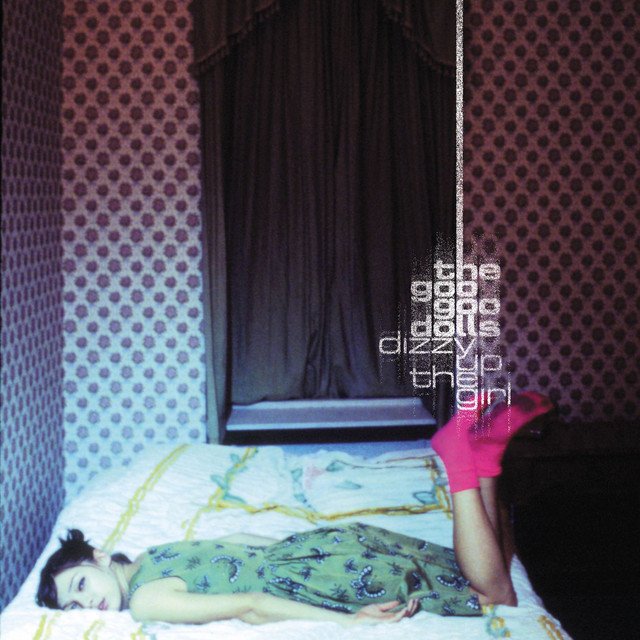
Iris – The Goo Goo Dolls
Release date: 1998
Iris Re-amplified: The Goo Goo Dolls’ Post-Grunge Classic Through a Modern Rock Lens
Introduction
Released in 1998, The Goo Goo Dolls’ “Iris” stands as a seismic crossover moment, marrying the heart-on-sleeve intensity of post-grunge with the radio-ready shimmer of alternative rock. Folded into the band’s blockbuster album Dizzy up the Girl, the track evolved from a soundtrack contribution into a generation-defining anthem that still resonates with contemporary rock and metal audiences.
More than a ballad, “Iris” is a study in tension and release: hushed intimacy detonating into widescreen catharsis, all built on meticulous dynamics and melodic heft.
Origins and Release
While most listeners met the song when Dizzy up the Girl hit its stride, “Iris” first surfaced in 1998 and quickly became the record’s emotional nucleus. Its immediate ubiquity on rock and pop radio underscored a rare feat: a deeply personal song with underground DNA that connected at a massive scale.
The track’s placement on Dizzy up the Girl cemented the album as a late-90s cornerstone, aligning the band’s scrappy alt-rock roots with a newly cinematic scope that would define their mainstream era.
Musical DNA: Post-Grunge Heart, Alternative Rock Bones
At its core, “Iris” is built from post-grunge fundamentals—chiming open-string voicings, gravel-warm vocal grit, and a loud-soft-loud architecture—yet it’s finished with the polish and clarity of alternative rock. The arrangement glides from finger-picked intimacy to a towering chorus, with orchestral strings amplifying the emotional surge rather than softening it.
Electric guitars thicken the midrange as the song swells, drum accents push the transitions with muscular intent, and the bass anchors the bloom so the chorus lands with an almost arena-sized inevitability. It’s a blueprint many modern rock acts still chase: organic instrumentation, dynamic contouring, and a chorus that explodes without sacrificing nuance.
Song Meaning: Choosing Vulnerability Over Invincibility
“Iris” grapples with the paradox of being seen: the risk of revealing yourself versus the ache of staying hidden. The narrator reaches for authenticity, willing to trade comfort and certainty for real connection. That conflict—between isolation and intimacy—gives the song its ache and its lift.
Contextually tied to a story about sacrificing immortality for love, the lyric perspective frames longing as an act of courage. It’s not simply romantic yearning; it’s a declaration that truth, even when raw, is worth the fall. That stance turns a gentle melody into something quietly defiant.
Why It Hooks Modern Rock and Metal Fans
Even outside the heavy spectrum, “Iris” mirrors the mechanics that drive impactful rock and metal: tension building through restrained verses, a percussive kick into the chorus, and a dramatic crescendo that rewards patience. The harmonic drones and open-string shapes create a resonant bed that feels almost drop-tuned in spirit, giving the chorus a thick, enveloping presence.
There’s also a cinematic sweep—those strings function like additional guitars, widening the stereo field in a way that fans of symphonic metal or post-rock will recognize. Most importantly, the song’s emotional clarity translates across subgenres: the hook lands, the melody lingers, and the catharsis feels earned.
Standout Elements
Dynamic storytelling in the arrangement: each verse-peel adds weight, so when the chorus arrives, it feels inevitable rather than forced.
A vocal performance that stays human-scale—grainy, conversational, and then suddenly skyward—making the big moments hit harder.
Textural layering that never muddies the mix: acoustic shimmer, electric girth, and strings that punch above their “ballad” stereotype.
Legacy and Impact
Decades on, “Iris” remains a staple of rock radio and a frequent target for reinterpretation across the heavier spectrum, proof that structural power and emotional directness outlast production trends. Its influence is audible any time a modern band fuses vulnerability with a surgically timed crescendo.
For listeners who live on contemporary rock and metal, “Iris” endures not as a relic, but as a reminder: volume is only half the equation—the other half is how you earn it. In 1998, The Goo Goo Dolls wrote both sides of that formula, and it still adds up.
Listen on Spotify:
Useful links:
